
EDI Voices is an interview series highlighting some people behind equity, diversity, and inclusion in geoscience.
Through short conversations, we explore why individuals choose to engage in EDI, what drives their commitment, and how this work shapes their professional and personal lives.
These stories showcase not only the importance of EDI, but also the positive impact that getting involved can have on individuals, communities, and the wider geoscience sector.
EDI Voices Showcase
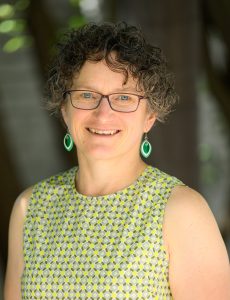
Q. Who are you?
I am a Professor in Geosciences in the Future Industries Institute at Adelaide University, Chief Scientific Officer of MinEx CRC, and Board Member of AuScope. My research focuses on developing technologies and techniques for more environmentally responsible mineral exploration and ensuring we have adequate supply of metals required to build renewable technologies that will address the issue of climate change.
Alongside my research I am a strong advocate for equity, diversity and inclusion (EDI) in STEM. I contribute to research programs, advisory groups and committees, and was the inaugural recipient of the Geological Society of Australia’s Nell Ludbrook Medal (2026) for championing inclusive culture within the Earth sciences community. Creating environments where people feel they belong, and can thrive, is something I care deeply about.
Q. What drew/attracted you to get involved in EDI activities?
In 2019, I had the opportunity to become involved in a research project investigating gender diversity and leadership in geoscience. That project involved interviewing Australian geoscientists across industry, government and academia and at all career stages. Analysing those interview transcripts was both confronting and eye-opening. While I have certainly faced challenges, I realised how fortunate and privileged I have been in my geoscience career, and hearing others’ experiences gave me a much broader perspective on the systemic barriers that still exist.
That project shifted something in me. It created a strong sense of responsibility to ‘pay it forward’, and to use my position to advocate, raise awareness and help ensure others can experience the geosciences as positively as I have.
Q. What has being involved with an EDI initiative helped bring to you? What have you learned / what has changed for you?
Being involved in EDI initiatives has given me a strong sense of purpose and connection. It has introduced me to inspiring people from around the world and led to conversations I may never otherwise have had. It has also prompted significant self-reflection. I have thought more deeply about belonging, privilege and leadership, and about the kind of person I want to be and the culture I want to help shape. Perhaps most importantly, it has reinforced that the geoscience community is one where I both belong and can contribute meaningfully. Supporting others, and seeing and being part of real cultural shifts, no matter how big or small, is incredibly rewarding.
Q. In what area of your work / job / life, has learning about EDI had the most impact or influence?
Learning about EDI has strongly influenced my leadership style. It has encouraged me to look beyond my own experiences and to be more conscious of the invisible barriers others may face. I now think more deliberately about creating inclusive spaces in research teams, meetings, and committees.
Recognising our own privilege is powerful. It helps us move from passive awareness to active support and advocacy. I genuinely believe this work has made me a better leader, colleague and mentor. If we each challenge ourselves to take responsibility at an individual level, collective change becomes possible.
Q. Any advice for people who want to get involved? (e.g., why, how)?
EDI work is important, but it can also be emotionally demanding. My advice is to be clear about your motivations and to look after your own wellbeing. Much of this work is voluntary, and burnout is real.
Start small. Look for local or professional EDI groups in your region or discipline. Reach out, attend a meeting, listen and learn. There is many ways to contribute, including advocacy, mentoring, policy input, research, or simply amplifying others’ voices. Find a group that aligns with your values and capacity. Put your hand up in a way that feels sustainable for you. You will be welcomed; and the impact, both personally and collectively, is worth it!
Q. Who are you?
I am a UK-based Principal Geotechnical Engineer with the international multidisciplinary consultancy GHD based in their London office. Growing up in Cornwall, my passion for geoscience stemmed from as a kid, when I started collecting minerals and rock samples and designing Lego mega-structures in my bedroom. My 20+ years of professional experience have been working for UK-based international consultancies on ground engineering projects, providing innovative and robust solutions both in the mining and civil engineering sectors.
At the age of six (in 1977), I was diagnosed as being neurodivergent (autistic, dyslexic, dyspraxic traits) and knowing I was different, odd in some way but not less. Then, midway through my undergraduate studies in 1994, I was diagnosed as having a progressive condition (in both eyes) called keratoconus, which meant being visually impaired despite periodic operations to stabilise the condition in both eyes. I graduated from Exeter University (Camborne School of Mines) in 1995 with a 2-1 in Industrial Geology.
Since then, I have become a Chartered Engineer, Fellow of The Institute of Materials, Fellow of the Institution of Civil Engineers, Minerals & Mining, a Chartered Geologist, a European Geologist and a Fellow of the Institute of Diversity and Equality Professionals. Currently, I am serving as a Geological Society Vice President for Equity Diversity Inclusion Accessibility and a former committee member of several other geoscience committees.
In addition, I have been an inaugural chairperson of several national online groups supporting those who are disabled or neurodivergent in STEM. I am a presenter, mentor, blogger, advisor and collaborator with several UK universities and academics on the acceptance of neurodiversity and disability in STEM. I am viewed as a passionate role model, focused engineer and tireless influencer, making workplaces and society more equitable and inclusive to one and all.
Outside of work I have been married for 20+ years to a wonderful and supportive wife; we have one exceptional daughter. I am a dystopian science-fiction fan and a collector of rare BBC merchandise from selected series. I am a devoted Liverpool Football Club fan since 1982 through the good times and the bad times. Over the weekends, I listen to football on the radio, and often turn my curiosity with big data into spreadsheet modelling of weekly football results into seasonal predictive models. The rest of my free time, is occupied by maintaining our garden, being a poor cook / sou-chef and salivating quizzes.
Q. What drew/attracted you to get involved in EDI activities?
Being neurodivergent and disabled, I quickly steered away from the Medical and Social Models of Disability. I realised I wasn’t the problem and decided to place less emphasis on my differences. This meant choosing to live by the neuroinclusion approach. I would interact with a world designed not for me and others like me in mind, but view my conditions as the product of an interaction between the characteristics of a disabled person and the environment around them.
Since graduation, I chose to work authentically with boundaries; I was aware that many people choose to see only what they want to see. The difference in my case is that I knew my vision was limited. In the early 2000’s, whilst working unmasked and open about my conditions, I could clearly see the gap between how the geoscience and engineering said how it valued diversity and how systems, behaviours, and expectations actually operated day to day.
By 2013, I was headhunted by another company, accepted by my peers, and elected to their EDI work international committee. Quickly, I turned my frustrations into something constructive — changing systems rather than asking others to keep adapting themselves. But I still noticed myself and other talented people being excluded from opportunities, not because of ability, but because the environment was not designed with others in mind. Often, differences were treated as a problem to manage rather than a strength to value.
The realisation that EDI is not about being “nice” or ticking boxes; it was about us — fairness and unlocking potential of one and all. Working in STEM is better when we include a wider range of perspectives — and worse when we quietly filter people out. I felt a huge responsibility, as a role model but I still had not reached a point in my career where I still didn’t have enough security and credibility to speak up for everyone but for some and my adjustments (accommodations) at work.
However, as time progressed, I did not want the next generation to feel as isolated, restricted, as I often had. In conclusion, I got involved because I cared about geoscience and engineering as a profession — and I wanted it to be somewhere everyone can belong and thrive, or constantly prove they deserve to be there.
Q. What has being involved with an EDI initiative helped bring to you? What have you learned / what has changed for you?
Being involved in EDI initiatives has changed me both professionally and personally. One of the biggest things it’s brought me is the means to support myself and others. Before EDI work, I felt inequity very clearly, but I didn’t always have the frameworks or vocabulary to explain what was happening. I have made trusted friendships because of EDI and it has provided tools to articulate issues in a way that others can hear — shifting conversations from “this is just my experience” to “this is a systemic pattern together we can address for future generations.
I could do it alone but together we are playing a collective role by educating our fellow peers and promoting solutions to inaccessible environments (buildings, services, communication). In my early work years, it was hard work where I encountered barriers, or challenged the inappropriate attitude of others (stereotypes, prejudice, discrimination) and questioned the status quo of unequal organisations (practices, procedures), all were identified.
I am also internally strengthened my confidence by combating boundaries. Additionally, I have learned when to push, when to pause, and when something isn’t mine to fix. Over time it has become clearer now about the difference between advocating for change and absorbing emotional labour that should sit with others and organisations.
I have also learned a lot about intersectionality — not just intellectually, but in practice. I have spent a lot of time listening to others’ lived experiences, sometimes they have highlighted where my own experiences give me insight, and where they do not. Listening has made me more thoughtful, more collaborative, and more willing to step back when it is not my space to participate or not suited to be the change maker.
Another major change is how I see leadership. I no longer equate leadership with hierarchy visibility. Some of my most impactful EDI work happens quietly: changing a process, reframing a policy, mentoring one person at the right moment. That has reshaped how I show up at work more or disappear.
Finally, EDI has helped me reclaim a sense of agency. Instead of feeling trapped by systems that were not built for people like me, I have found ways to influence them — even if change is slow and imperfect. It has not made work easier, but it has made it more aligned. I feel less like I am surviving (not thriving), and more like I’m actively shaping it.
Q. In what area of your work / job / life, has learning about EDI had the most impact or influence?
Before engaging deeply with EDI, I often internalised barriers and ruminate frequently — if something felt inaccessible or harmful, due to needing to adapt better, try harder, or fit in more effectively. EDI shifted that lens, I realised I was not alone, and adopting a strengths-based approach, I could still pursue a meaningful career in geoscience and engineering. Over time, others completely accepted me who also helped me recognise when challenges were structural, not personal, and that has fundamentally changed how I advocate for myself and others.
In my day-to-day job, this shows up most strongly in how I influence systems rather than just cope within them. I now pay close attention to things like how tasks are defined, how “good performance” is measured, who gets informal flexibility, and whose voices are treated as credible. For example, awareness has changed how I contribute to meetings, how I mentor younger professionals, and how I challenge decisions —quietly, but deliberately or abruptly to challenge status quo when required.
It has also had an impact on how I manage my energy levels and psychological safety. Learning about EDI, becoming a part-time EDI professional focusing on disability and neurodiversity inclusion and accessibility, has given me permission to prioritise sustainability over optics. Now, I am willing to share what I need, and question why not cannot be provided, or I will now push back on unnecessary norms, and to stop sacrificing my wellbeing to fit an outdated idea of professionalism.
Beyond work, EDI has influenced how I think about responsibility and solidarity. I am more intentional about when to ask to present, when to amplify others, and when to step aside. Personally, despite I no longer see the work of EDI as something organisations and systems “add on” — it’s a way of making decisions, designing environments, and treating people.
EDI has authentic meaning when often small steps and actions engage the full potential of unique individuals where innovation thrives, and views, beliefs and values are integrated whilst living in this world full of volatility, uncertainty, complexity and ambiguity. Together, we can provide vision, understanding, clarity, and agility to collaborate and solve even the global problems. It is a case of plate tectonics, the structure of the post-pandemic world with its many associated phenomena (climate change, fundamentalism and such) resulting from the interaction of flexible EDI plates which move slowly over the underlying old order.
Q. Any advice for people who want to get involved? (e.g., why, how)?
Get involved in EDI from where you are and who you are—not by comparing yourself to others or trying to please people, but from a genuine commitment to fairness, inclusion, and sustainability. The most meaningful EDI work comes from curiosity and steady dedication, not guilt, the desire to “fix,” or believing you have all the answers. Much of this work focuses on improving systems so fewer people are excluded from geoscience and engineering in the first place.
It is important to recognise that EDI work can be slow, uncomfortable, and emotionally demanding. Do it because you believe in it, not because you expect praise or reward—these often do not come. You also do not need a title or a formal committee role to make a difference. Start where you already have influence. Pay attention to whose voices are missing, who gets interrupted, whose needs are treated as “exceptions,” and where rules are applied inconsistently. Active listening is a small but powerful step toward becoming a proactive ally.
Engagement often begins with learning. Read widely, attend talks, and, when invited, listen to lived experiences without immediately problem‑solving or becoming defensive. Building an understanding of concepts like intersectionality, privilege, reasonable adjustments, and systemic bias helps ensure you do not unintentionally cause harm, even with good intentions. Then consider how your role positions you to make change—sometimes the most impactful action is altering a process, challenging a metric, or asking a new question in a meeting.
EDI should not fall only on those with specialised training, those from marginalised groups, or those who have won awards. Everyone has a role. If you hold relative privilege or institutional safety, acknowledge it and use it to absorb some of the friction that others face. You cannot fix everything or support everyone, and that is okay. Focus on what is actionable: a single improved policy or one more included person often matters more than a grand statement filled with jargon and no sustainable change.
Finally, remember that EDI work is more sustainable when done collectively. Find your community—proactive allies and tribe who can share knowledge, offer support, and act as a sounding board. They might be in your workplace, professional societies, or beyond. Be prepared to step outside your comfort zone and examine your own biases. Together, we are stronger, and together we can make lasting change.
Would you like to be featured?
We are always looking to highlight diverse voices and experiences. If you are involved in EDI and would like to share your story, we would love to hear from you.
Please email us at ediggeo@gmail.com